

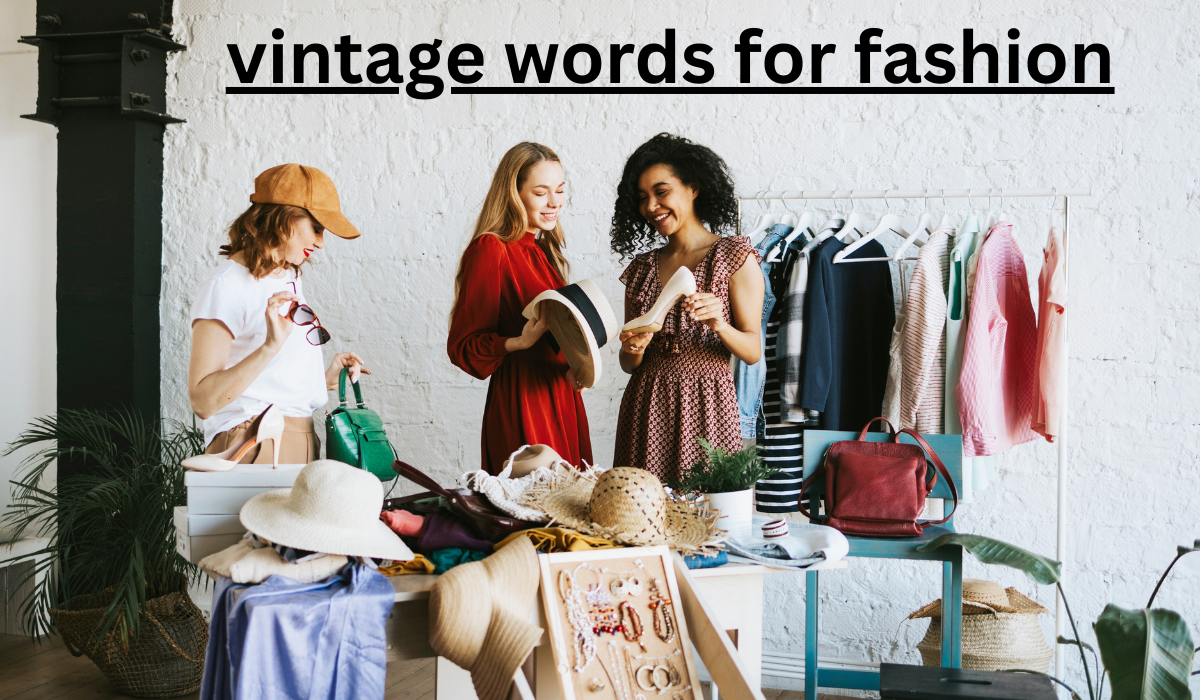
Fashion language changes over time, but some terms remain timeless. Vintage words for fashion describe clothing styles, accessories, and trends from past decades, reflecting the culture and design of their era. Words like frock, chemise, flapper, and rockabilly instantly bring to mind iconic fashion periods.
Today, these classic fashion terms are returning to popularity through thrifting culture, retro trends, and sustainable fashion movements, helping people understand style history and describe vintage-inspired looks more clearly.
What Does “Vintage” Mean in Fashion?
In fashion, the word vintage refers to clothing or accessories that originate from a previous era and reflect the design trends of that time.
Originally, the term vintage came from the wine industry, where it described the year grapes were harvested. Over time, the fashion industry adopted the word to represent garments that capture the essence of a particular decade.
In general:
- Vintage clothing: Items produced 20–100 years ago
- Antique clothing: Items over 100 years old
- Retro clothing: Modern garments designed to imitate vintage styles
Vintage clothing is valued for several reasons:
- Unique craftsmanship
- High-quality materials
- Historical authenticity
- Timeless design elements
Because of these qualities, vintage fashion often feels more distinctive and personal compared to mass-produced modern clothing.
Vintage vs Retro vs Antique: What’s the Difference?
These terms are often confused, but they have distinct meanings in the fashion world.
Vintage
Authentic clothing produced in a past decade, usually between 20 and 100 years old.
Retro
Modern clothing designed to recreate the appearance of older fashion styles.
Antique
Garments or accessories that are over 100 years old and considered historical collectibles.
Understanding these differences is important for collectors, fashion bloggers, and vintage shoppers, because it helps identify whether a piece is genuinely old or simply inspired by past trends.
Why Vintage Fashion Vocabulary Matters Today
Vintage terminology does more than describe clothing—it tells the story of fashion history.
Each vintage fashion word carries cultural meaning and visual imagery. For example:
- Flapper instantly recalls the lively nightlife and freedom of the 1920s.
- Rockabilly reflects the rebellious youth culture of the 1950s.
- Bohemian represents artistic and unconventional lifestyles.
These terms allow fashion writers, bloggers, and stylists to describe style in a more vivid and historically accurate way.
Vintage language is also important for:
Fashion marketing
Brands use terms like “vintage-inspired” or “retro silhouette” to evoke nostalgia and authenticity.
Sustainability movement
Vintage clothing promotes reusing garments instead of buying fast fashion, which supports environmentally responsible shopping.
Fashion storytelling
Using vintage vocabulary adds depth, personality, and cultural context to fashion writing.
Classic Vintage Words for Fashion Lovers
Fashion history includes hundreds of interesting terms that describe clothing, accessories, and style movements. Here are some of the most iconic vintage fashion words.
Vintage Clothing Style Terms
Some vintage terms refer to specific types of garments or silhouettes.
Frock
An old-fashioned word for a dress, commonly used in the early 20th century.
Chemise
A loose, straight-cut dress with little or no waist definition.
A-line dress
A dress shape that gradually widens from the waist downward, creating a triangular silhouette.
These words remain important for fashion historians and designers who study traditional garment structures.
Vintage Accessories Terminology
Accessories once played a major role in everyday fashion, and many vintage terms describe these elegant additions.
Brooch
A decorative pin worn on clothing, often used as jewelry or ornamentation.
Capelet
A small cape covering the shoulders, commonly worn over dresses.
Opera gloves
Long gloves extending above the elbow, traditionally worn with formal evening wear.
Although some of these accessories are less common today, they continue to appear in vintage-inspired fashion collections.
Iconic Vintage Fashion Eras and Their Vocabulary
Different decades introduced their own unique style language.
1920s Flapper Era
The 1920s transformed women’s fashion. Dresses became shorter and looser, reflecting greater social freedom.
The term flapper described fashionable young women who embraced modern culture, nightlife, and dancing.
Flapper fashion often included:
- Beaded dresses
- Feather headbands
- Loose silhouettes
- Art Deco accessories
The vocabulary of this era still influences modern fashion discussions.
1950s Rockabilly Style
The 1950s combined elegance with rebellious youth culture.
The word rockabilly came from music culture and soon became associated with a bold fashion aesthetic.
Common elements of rockabilly fashion include:
- Swing skirts
- Polka-dot dresses
- High-waisted pants
- Leather jackets
These vintage terms frequently appear in retro fashion stores and vintage clothing blogs.
Vintage Fashion Words Still Used Today
Even though these words originated decades ago, they remain common in modern fashion conversations.
Thrift Store Chic
A style created by combining second-hand or vintage clothing pieces.
Deadstock
Vintage clothing that has never been worn and still has original tags.
Reproduction
New garments designed to replicate vintage designs.
Retro Style
Modern clothing inspired by past fashion trends.
These terms are widely used by fashion bloggers, thrift shoppers, and vintage collectors.
Why Vintage Fashion Is Becoming Popular Again
Vintage fashion vocabulary is growing in popularity because vintage clothing itself is experiencing a revival.
Several factors are driving this trend.
Sustainable fashion movement
Consumers increasingly seek eco-friendly alternatives to fast fashion.
Thrifting culture
Second-hand shopping has become a popular way to discover unique fashion pieces.
Social media influence
Platforms like Instagram, TikTok, and Pinterest have introduced younger audiences to vintage aesthetics and retro styling.
Because of these trends, vintage fashion language is appearing more frequently in online fashion discussions and search queries.
How to Use Vintage Fashion Words in Blogging
If you run a fashion blog, using vintage vocabulary can improve both storytelling and search visibility.
Here are a few tips:
- Use vintage terms to describe silhouettes and fabrics.
- Include historical references to add context and authenticity.
- Answer common search questions about vintage fashion.
- Write in a conversational tone so readers easily understand the terminology.
Using these words naturally also helps content rank better for long-tail fashion keywords and AI search results.
Conclusion
Vintage words for fashion are more than nostalgic expressions—they represent the rich history of clothing design and cultural trends. From classic terms like frock and chemise to iconic style labels such as flapper and rockabilly, these words capture the spirit of fashion across different decades.
Frequently Asked Questions
What are vintage fashion words?
Vintage fashion words are historical terms used to describe clothing styles, accessories, or fashion movements from past decades.
What qualifies as vintage clothing?
Most fashion experts consider clothing between 20 and 100 years old to be vintage.
Is vintage the same as retro?
No. Vintage refers to authentic older clothing, while retro describes modern clothing inspired by vintage styles.
Why are vintage fashion terms popular again?
Interest in sustainability, thrifting, and nostalgic fashion trends has revived many vintage fashion words.
Where can I learn more vintage fashion vocabulary?
You can explore fashion history books, vintage clothing guides, museum collections, and fashion blogs that focus on historical style terminology.