

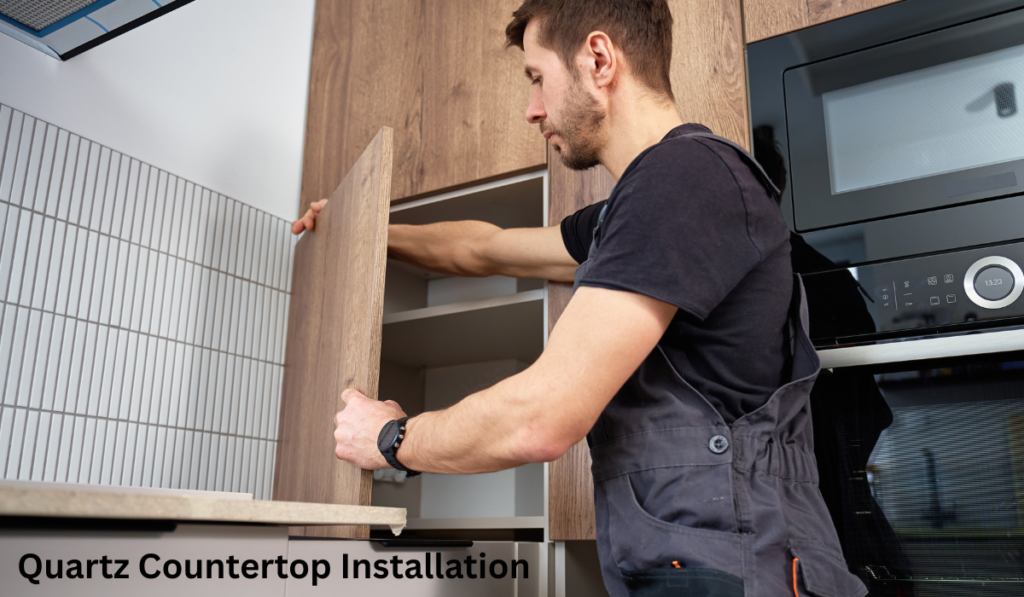
Installing quartz countertops transforms your kitchen without the upkeep headaches of natural stone, and you can plan the process so it goes smoothly and stays within budget. A professional-quality quartz installation requires precise measuring and templating, proper support and leveling, and careful seam placement to ensure a durable, seamless finish.
You’ll learn what tools and prep steps matter, how Quartz Countertop Installation works, how installers fit and secure slabs, and which post-installation practices keep the surface looking new. Follow the practical steps ahead and you’ll know what to expect at each stage and how to avoid common costly mistakes.
Quartz Countertop Installation Process
You’ll prepare the site, measure and template accurately, cut and fit the slabs to your cabinets and openings, then secure and seal joints for a stable, watertight finish. Stay precise at each step to avoid costly mistakes and ensure a factory-quality result.
Preparation and Planning
Clear the workspace and confirm cabinets are level within 1/8 inch over the countertop span. Remove appliances and wall fixtures that interfere with the slab layout.
Verify cabinet blocking and overhangs match your design; common overhangs are 1″–1.5″ for standard edges and up to 12″ for seating where additional support is required.
Gather tools and materials: suction cups, bridge saw or water jet access, diamond blades, straight edge, level, shims, silicone adhesive, epoxy for seams, and safety gear. Arrange for at least two strong helpers or professional rigging for slab handling.
Check plumbing and electrical rough-ins are in final positions; relocate if needed before templating to avoid rework later.
Measuring and Templating
Measure cabinet widths, depths, corner angles, and locations of sinks, faucets, cooktops, and overhangs to the nearest 1/16″. Use a digital caliper or laser measure for accuracy on critical dimensions.
Create a physical or digital template from 1/4″ MDF or rigid cardboard that mirrors the exact top profile, including cutouts and edge details.
Mark cutout centrelines and appliance clearances on the template. Transfer hole locations, countertop heights, and backsplash returns. Label each template piece (e.g., “Island North Long”) and photograph placement for reference.
Double-check measurements with the client or plans before sending templates to the shop. Once the shop confirms, slab cutting begins; changes after cutting are difficult and costly.
Cutting and Fitting Quartz
Clamp the slab securely and use a wet diamond blade or water jet to cut openings and profiles to prevent chipping. Score and cut slowly, keeping water flow consistent to reduce dust and heat.
Dry-fit pieces on the cabinets to check alignment, overhangs, and seam placement. Aim to place seams over cabinet joints or support areas and keep seams away from sink or cooktop openings when possible.
Adjustments use a grinder with a diamond polishing pad to fine-tune edges and seams. Verify edge profiles match the backsplash and apron details before final polishing.
Confirm sink/cooktop fit by dry-mounting the fixtures; check for interference with undermount clips or mounting hardware and shim as needed for perfect seating.
Securing and Sealing Joints
Apply a continuous bead of recommended silicone or polymer adhesive to cabinet tops, then lower the quartz slab into place using suction lifters and even pressure. Use temporary clamps and shims to maintain level while adhesive cures.
For seams, use a color-matched two-part epoxy; mix small batches and apply evenly with a flat spatula. Press seams together, remove excess epoxy, and allow initial cure before sanding.
Finish seams with a 3-step sanding/polishing sequence: coarse to remove excess epoxy, medium to blend, fine to restore shine. Seal any visible hairline gaps with matching silicone to prevent moisture ingress.
Check final level, secure backsplash with adhesive and mechanical fasteners where required, and reinstall plumbing and appliances. Clean surfaces with manufacturer-approved products to avoid residue on the new finish.
Post-Installation Best Practices
Follow specific timing, cleaning, and maintenance steps to protect the seams, adhesives, and surface finish. Address curing, initial cleaning, and daily care promptly to preserve appearance and performance.
Curing and Setting Time
Allow adhesives and sealants to reach full strength before applying weight or stress. Wait at least 24 hours before installing sinks, appliances, or heavy fixtures that exert downward pressure on seams or cutouts. If installers used epoxy or polyurethane adhesives, expect full cure in 48–72 hours depending on temperature and humidity.
Keep the room temperature between 65–80°F (18–27°C) and relative humidity under 60% during curing. Avoid moving cabinets or shifting countertops; even small movements can break thin adhesive beads. If any gaps or soft spots appear after curing, contact your fabricator for seam or adhesive touch-up rather than attempting DIY fixes immediately.
Cleaning After Installation
Remove installation dust and residue with a soft microfiber cloth and a mild pH-neutral cleaner. Mix warm water with a few drops of dish soap or use a manufacturer-recommended quartz cleaner; spray and wipe rather than scrubbing aggressively. Rinse with clean water and dry with a soft cloth to prevent streaks and water spots.
Avoid abrasive pads, scouring powders, and bleach-based cleaners for the first week. Do not use solvent-based degreasers or high-pH products on fresh seams or recent adhesive lines. For silicone or caulk smears, use a plastic scraper and a small amount of isopropyl alcohol; test a hidden area first.
Routine Maintenance Tips
Wipe spills promptly—especially wine, coffee, citrus, and oil—to minimize staining risk and reduce the need for stronger cleaners. Use coasters under glasses, trivets for hot pans, and cutting boards for food prep to protect surface finish and prevent thermal shock. Although quartz is non-porous, repeated exposure to harsh chemicals can dull the surface over time.
For daily care, use a microfiber cloth and warm soapy water or a dedicated quartz cleaner. For dried food or sticky residue, let warm soapy water soak for a few minutes then lift with a plastic scraper. For stubborn marks, a non-abrasive cream cleaner applied with a soft cloth usually works; follow with a rinse and dry.