

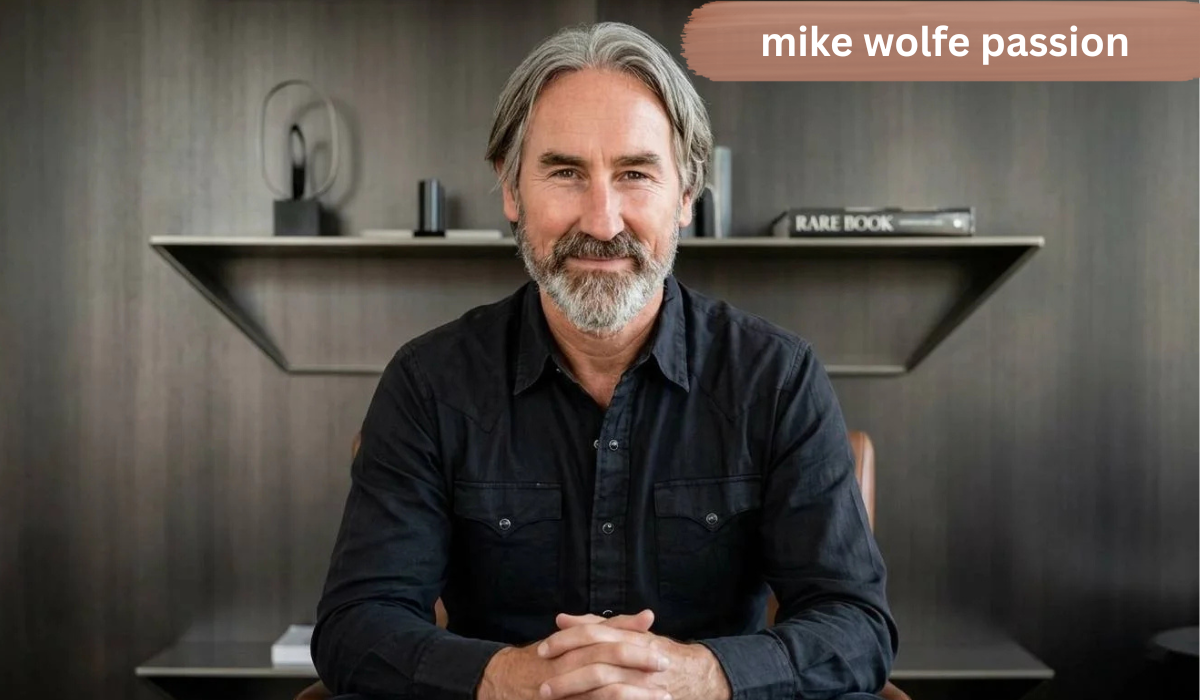
For nearly 15 years, Mike Wolfe has invited America into barns, sheds, and dusty attics through the History Channel’s American Pickers. But what many viewers don’t realize is that the camera follows only part of his story. Off-screen, Wolfe has dedicated himself to a far more ambitious mission: saving the very towns he’s spent his career exploring.
This is the Mike Wolfe passion project—a sweeping, multimillion-dollar effort to restore historic buildings, revitalize Main Streets, and prove that small-town America still matters in an era of rapid change .
What Is the Mike Wolfe Passion Project?
The Mike Wolfe passion project isn’t a single building or a formal nonprofit organization. It’s better understood as a living ecosystem—a decades-long commitment to preservation, community revival, and storytelling that has quietly transformed parts of Tennessee and Iowa .
At its core, the project operates on a simple belief: that old buildings, like old objects, carry stories worth saving. Wolfe’s approach combines historic preservation, adaptive reuse, and community development to give forgotten structures new purpose while honoring their past .
“I’ve spent the past 30 years of my life working on old buildings and houses,” Wolfe shared on Instagram in early 2025. “Each one teaches me something different. When they speak, I listen” .
The Vision: “100 Buildings, 100 Stories”
Behind Wolfe’s work lies an ambitious ethos: “100 Buildings, 100 Stories.” The goal is to save and reuse 100 historic structures as anchors of local identity and memory—preserving not just architecture, but the narratives embedded in every beam and brick .
This philosophy guides every decision. Rather than demolishing old buildings for new construction, Wolfe champions adaptive reuse: transforming neglected properties into vibrant spaces for community, tourism, and culture .
The approach carries a strong sustainability angle as well. Preserving old architecture reduces construction waste, saves materials, and gives heritage renewed value without the environmental cost of new builds .
Columbia, Tennessee: The Living Laboratory
While Wolfe’s preservation work began in his hometown of Le Claire, Iowa , his most visible and ambitious efforts have unfolded in Columbia, Tennessee—a city of roughly 43,000 located 45 minutes south of Nashville.
Since 2017, Wolfe has quietly acquired more than two dozen downtown parcels, rehabbing warehouses, storefronts, and residences with careful attention to historical detail. Local estimates place his investment at approximately $93 million, and the results are visible on every corner. New businesses—from butcher shops to boutique retailers—now occupy spaces that once sat empty, and tourism has measurably increased .
The 1940s Esso Station That Broke the Internet
In May 2025, one project in particular captured national attention. Wolfe revealed the completed restoration of a long-abandoned 1940s Esso service station in downtown Columbia .
“When I purchased this Esso station in downtown Columbia TN, I knew that I was going to need a company that could match my passion and bring this place to life,” Wolfe captioned his Instagram announcement .
The transformation was striking. The building had been stripped to its bricks, repointed, and reborn as an open-air courtyard featuring a fire pit, seating, and period-appropriate outdoor lighting. A tenant was already planning to open a food and cocktail space called “Revival” inside .
Fans responded with enthusiasm. “We keep driving by, it looks incredible,” one commented. Another called it simply “Beautiful” .
Columbia Motor Alley: A Cathedral of Chrome
Five blocks from the Esso station sits Wolfe’s most ambitious Columbia project yet: Columbia Motor Alley, a 1947 Chevrolet dealership transformed into a retail, event, and vintage car hub .
According to the Antique Archaeology website, the project represents “Mike’s love of transportation history and historic preservation come together.” The space now houses vintage Indian and Harley-Davidson motorcycles displayed under clerestory windows, with a mezzanine showcasing rare hood ornaments .
Crucially, Motor Alley also serves as headquarters for Two Lanes, Wolfe’s lifestyle brand and content platform. The store sells apparel with subtle logos, but each product tag tells a micro-story from the road—where the design idea originated, how it connects to past industries, and why supporting small businesses matters .
The 1873 Italianate Restoration
Beyond commercial projects, Wolfe has invested deeply in residential restoration. In early 2025, he shared progress on an 1873 Italianate home he’s been restoring in Columbia .
“Shutters are up on the tower,” Wolfe posted, showing the brick structure with construction ladders still in place. “The tower and the porch were missing from this beautiful structure, but we’re fortunate to be working from some very detailed photos” .
Fans immediately recognized the significance. “Love the old building, and the quality of the restoration,” one wrote. “I would love to see Mike do a restoration show of houses and vintage motorcycles” .
Nashville’s Big Back Yard: A Regional Vision
Wolfe’s vision extends beyond individual buildings to entire regions. In partnership with local leaders from 13 rural Middle Tennessee and North Alabama communities, he helped launch “Nashville’s Big Back Yard” —a regional tourism movement highlighting towns with populations under 5,000 .
The initiative, anchored by 100 miles of the scenic Natchez Trace Parkway, promotes authentic small-town experiences from Leiper’s Fork, Tennessee (where Wolfe lives) down to The Shoals of Alabama .
“Everybody’s always looking for an authentic experience,” Wolfe explained. “‘Nashville’s Big Back Yard’ can serve as a model for building tourism in small towns across the country. These are also places to live affordably and with a new sense of purpose” .
The Philosophy: Why This Work Matters
Preservation Over Profit
Wolfe frequently emphasizes that his work prioritizes context over cash. He’s reportedly turned down five-figure offers for antique gas pumps because they belonged inside the very buildings he was restoring. He prefers long-term stewardship to quick flips, loaning artifacts to local museums when the context serves the public .
Saving Stories, Not Just Structures
For Wolfe, buildings are vessels of memory. They contain stories of who built them, what work happened there, how towns grew, and how people lived . When a building is demolished, those stories vanish forever.
“These aren’t just buildings,” Wolfe told CBS News. “All of these places matter for one reason or another, and some can survive” .
Skilled Trades and Education
Restoring historic buildings requires specialized skills—carpentry, masonry, metalwork—that are increasingly rare. Wolfe’s projects employ local craftspeople, helping keep traditional trades alive while supporting local jobs .
He’s also invited school field trips to Motor Alley, letting students handle old tools and learn about industrial arts. In an era when such classes are disappearing from schools, the Mike Wolfe passion project delivers a living curriculum .
How Wolfe’s Approach Differs from Conventional Development
| Aspect | Mike Wolfe’s Approach | Conventional Development |
|---|---|---|
| Primary Goal | Save history and serve community | Maximize profit |
| Old Buildings | Restore and adapt | Often demolish |
| Community Role | Central to planning | Often secondary |
| Storytelling | Core focus | Rarely considered |
| Timeline | Long-term stewardship | Short-term returns |
| Sustainability | Inherent through reuse | Often overlooked |
Challenges Along the Way
The Mike Wolfe passion project hasn’t been without obstacles.
Financial risks loom large. Historic renovation is expensive, and returns aren’t guaranteed. A single roof truss replacement can cost six figures, and insurance premiums on historic masonry are substantial .
Regulatory hurdles have slowed progress. In one instance, a building failed city inspection due to framing and electrical concerns, requiring extensive rework . Wolfe has navigated building permits, local regulations, and community debates over tax-increment financing .
Community skepticism has also surfaced. Some longtime residents worry that renovations will drive up rents beyond local budgets. Preservation purists occasionally question mixing retail with museum-like spaces .
Wolfe answers skeptics with transparency. He publishes progress photos, credits local tradespeople by name, and engages openly with city councils and community members .
Recent Developments and New Horizons
A New Television Project
Despite recovering from a serious car accident in September 2025—which left him with a broken nose and knee and wrist injuries—Wolfe has announced a new History Channel project .
Titled History’s Greatest Picks with Mike Wolfe, the eight-episode series will explore “legendary treasures, relics and artifacts from across history” .
“I’ve been on the road filming American Pickers for over a decade,” Wolfe said in a release. “I’m looking forward to embarking on a new adventure, while continuing my lifelong passion of picking with this series” .
The Esso Station Opens
As of late 2025, the restored Esso station’s tenant space, “Revival,” continues taking shape. While an official opening date hasn’t been announced, fans are eagerly watching for opportunities to visit .
Future Plans
Looking ahead, Wolfe has hinted at additional projects: converting an 1890 cotton mill into mixed-use lofts, expanding his Columbia guesthouse footprint, and potentially franchising the Motor Alley concept in other heritage towns. A print quarterly spotlighting unsung American artisans may also be in the works .
Why the Passion Project Resonates Now
In an age of rapid technological change—where phones become obsolete in months and streaming menus shuffle nightly—Wolfe’s work offers something different. It slows the frame rate. It suggests that county fair grandstands and diner signs deserve respect alongside high art .
The project also democratizes preservation. By sharing progress on social media, Wolfe invites 1.3 million followers to feel like curators. That sense of participation resonates deeply at a time when many people crave connection to something sturdy and lasting .
How to Experience the Mike Wolfe Passion Project
For those inspired to see Wolfe’s work firsthand:
- Visit Columbia, Tennessee – Downtown Columbia offers multiple restored properties within walking distance, including the Esso station and Columbia Motor Alley.
- Explore Nashville’s Big Back Yard – The 13-town region offers authentic small-town experiences, local cuisine, and historic sites .
- Stay at Two Lanes Guesthouse – Wolfe’s short-term rental in downtown Columbia provides an immersive experience .
- Follow on Social Media – Wolfe’s Instagram offers behind-the-scenes progress shots and restoration stories .
- Support Local Artisans – Many restored spaces feature work by local craftspeople and makers .
Conclusion: More Than One Man’s Project
The Mike Wolfe passion project is ultimately about something larger than one television star’s investments. It’s a model for how communities might approach their own futures—honoring the past while building toward tomorrow.
Wolfe often jokes that he’s “just a guy chasing stories on two lanes of blacktop” . But the work accumulating in Columbia, Le Claire, and beyond tells a different story. Empty garages become cultural landmarks. Children shake hands with metal shapers rather than algorithms. A long-closed Esso station glows again under Tennessee stars.
Frequently Asked Questions
What exactly is the Mike Wolfe passion project?
It’s Wolfe’s personal mission to restore historic buildings, revitalize small-town downtowns, support local artisans, and preserve American heritage—focused primarily in Columbia, Tennessee, and Le Claire, Iowa .
Where is Mike Wolfe’s restoration work located?
His primary focus is Columbia, Tennessee, where he’s acquired and restored over two dozen properties. He also maintains projects in his hometown of Le Claire, Iowa .
What is Columbia Motor Alley?
A 1947 Chevrolet dealership in Columbia that Wolfe transformed into a retail, event, and vintage vehicle space. It now serves as headquarters for his Two Lanes brand .
What happened to the Esso station in Columbia?
Wolfe restored a 1940s Esso service station into a community gathering space with outdoor seating, a fire pit, and a forthcoming food and cocktail venue called “Revival” .
Is Mike Wolfe still involved with American Pickers?
Yes, but he’s also developing new projects, including a History Channel series called History’s Greatest Picks with Mike Wolfe .
How can I visit Mike Wolfe’s restored properties?
Columbia, Tennessee, is the best destination. Downtown properties are publicly accessible, and Wolfe’s Two Lanes Guesthouse offers overnight accommodations .
Does Mike Wolfe have a new TV show?
Yes, History’s Greatest Picks with Mike Wolfe was announced in late 2025, an eight-episode series exploring legendary artifacts and treasures .
What happened to Mike Wolfe recently?
In September 2025, Wolfe and his girlfriend Leticia Cline were injured in a serious car accident in Columbia. Both are recovering, with Wolfe continuing to work on new projects .
Why does Mike Wolfe restore old buildings?
He believes buildings carry irreplaceable stories about American history and community identity. His philosophy is “100 Buildings, 100 Stories”—saving structures as anchors of local memory .
How is this different from regular development?
Wolfe prioritizes preservation, community benefit, and storytelling over maximizing profit. He restores rather than demolishes and engages local craftspeople .