

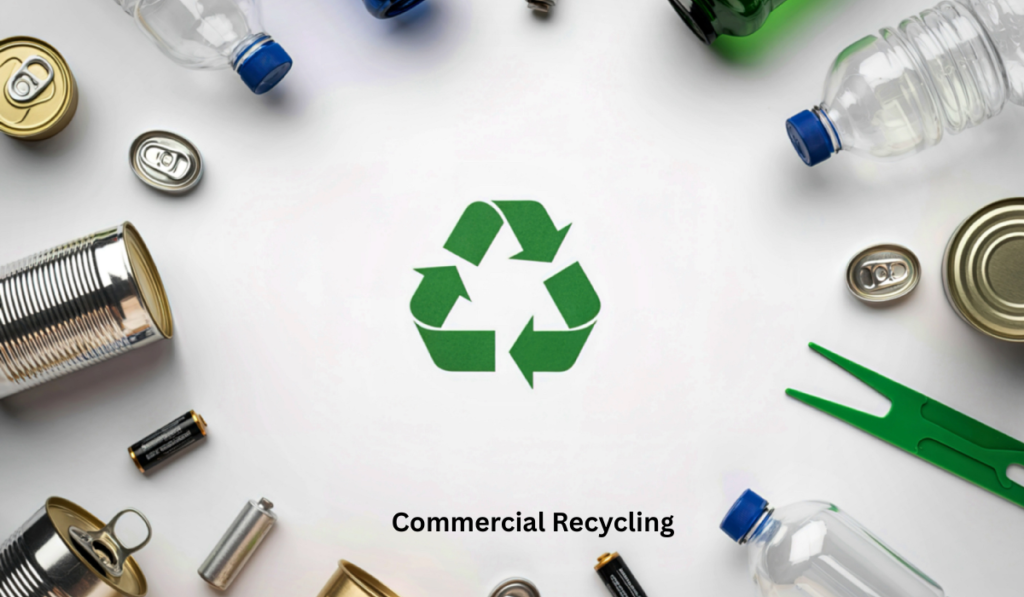
You generate a lot of waste every day, and effective commercial recycling can cut costs, reduce landfill use, and strengthen your company’s sustainability profile. Set up the right bins, partner with a reliable hauler, and train staff to prevent contamination — those actions will make recycling work for your business and save you money.
This article Commercial Recycle shows how commercial recycling differs from household programs, highlights the materials that matter most for recovery, and walks you through practical steps to design a program that fits your facility and budget. You’ll get clear guidance on choosing containers, scheduling pickups, and tracking performance so your program runs smoothly and scales with your needs.
Overview of Commercial Recycling
This section explains what commercial recycling is, how facilities and programs operate, which materials matter most, and the legal obligations you must meet. Expect actionable details on program setup, common material streams, processing steps, and compliance triggers.
Definition and Importance
Commercial recycling collects, sorts, and diverts recyclable materials generated by businesses, institutions, and other non-residential sites. You reduce landfill disposal costs, recover sellable commodities, and support corporate sustainability targets when you implement a reliable program.
You should focus on material streams that your operation generates most: paper and cardboard in offices and retail; organics in food service; plastics and metals in manufacturing and distribution. Measuring tonnage and contamination rates gives you specific metrics to track cost savings and diversion performance.
Stakeholder benefits include regulatory risk reduction, improved brand reputation with customers and investors, and potential revenue from recyclables. You should assign clear responsibilities and targets to staff to ensure consistent participation and measurable results.
How Commercial Recycling Works
Commercial recycling typically follows four steps: segregation at source, collection and transport, processing at material recovery facilities (MRFs) or composting/metal recovery plants, and sale or reuse of recovered commodities. You manage segregation through bin placement, signage, and employee training to reduce contamination.
Choose a hauler or aggregator that offers route frequency, reporting, and contamination mitigation services aligned with your volume and space constraints. At the MRF, materials are mechanically and manually sorted — screens, optical sorters, magnets, and eddy currents separate paper, glass, ferrous and non-ferrous metals, and plastics.
Track key performance indicators such as pounds diverted per month, contamination rate percentage, and cost per ton. These KPIs let you optimize collection frequency, container types, and on-site presumptive sorting to maximize recovery and control hauling costs.
Types of Materials Recycled
Prioritize material streams by volume and value: paper/cardboard, rigid plastics (PET, HDPE), metals (aluminum, steel), glass, organics (food waste, compostables), and electronic waste. Each stream requires specific handling: baling for cardboard, containers for organics, and secure e-waste collection for data protection and proper recycling.
Consider secondary streams that may apply: pallets, textiles, construction debris, and industrial scrap plastics. These often need compactors, shredders, or separate storage to avoid cross-contamination and to meet market specifications.
Label containers with accepted items and contamination examples. For organics, you may need odor control and scheduled pickups. For e-waste and hazardous components, follow chain-of-custody procedures and use certified recyclers to avoid regulatory and reputational risk.
Legal Requirements and Compliance
Regulations vary by jurisdiction but commonly require diversion reporting, proper handling of hazardous and electronic wastes, and contamination limits for single-stream programs. You must check state/provincial and local rules for mandatory recycling ordinances, landfill bans (e.g., organics or e-waste), and extended producer responsibility (EPR) policies affecting packaging.
Maintain records: weight tickets, manifests, contracts with haulers and processors, and certificates of recycling. These documents support compliance audits and corporate ESG reporting. Noncompliance can lead to fines, permit issues, or forced corrective actions.
Implement compliance controls: written procedures, employee training, periodic audits of material streams, and contracts that specify contamination tolerances and reporting frequency. For cross-border shipments of recyclables, ensure you meet export controls and international waste movement regulations.
Implementing Effective Commercial Recycling Programs
You will set clear objectives, select the right service provider, and train staff so recycling becomes routine and measurable. Focus on practical steps, reliable partners, and ongoing engagement to ensure materials get diverted and costs are controlled.
Steps to Establish a Program
Begin with a waste audit that quantifies volumes by stream (paper, cardboard, mixed containers, organics, e-waste). Track weight or volume for 2–4 weeks to identify high-impact targets. Use simple data: weekly pounds of cardboard and single-stream material per workstation or department.
Set measurable goals such as “reduce landfill waste by 40% in 12 months” or “recover 90% of office paper.” Choose bin locations based on flow—near printers, kitchens, and loading docks—and standardize container colors and labels.
Create a collection schedule tied to service frequency and bin capacity. Pilot the program in one department for 8–12 weeks, collect participation and contamination data, then scale and adjust container sizing or pickup cadence based on results.
Choosing a Recycling Partner
Request proposals from at least three licensed haulers or MRFs and compare service scope, pricing, and reporting. Ask for contamination thresholds, commodity resale terms, and whether they accept mixed or source-separated streams.
Verify certifications and permits, such as state solid-waste permits or R2/ISO where applicable. Review their route and processing photos or dashboards to confirm materials are sorted and marketed rather than landfilled.
Negotiate clear KPIs in the contract: pickup frequency, contamination limits, monthly diversion reports, and procedures for handling prohibited items. Include a clause for periodic rate review and a termination path if service or reporting fails to meet agreed standards.
Employee Training and Engagement
Train employees with short, role-specific sessions: 10–15 minute stand-ups for custodial staff and targeted 5-minute briefs for office teams. Provide laminated bin guides and quick reference cards showing acceptable items and common contaminants.
Use visual cues—consistent bin colors, icons, and sample waste displays—to reduce confusion. Run a 30–60 day pilot with weekly contamination checks and share results via email and posters.
Motivate behavior with department-level dashboards and simple incentives, such as a monthly recognition for lowest contamination rate. Maintain communication through brief monthly updates and a single point of contact for recycling questions to keep momentum and address issues quickly.