


Introduction
In the evolving landscape of pest management and environmental services, Anticimex Aktiebolag / Wisecon A/S Förvärvsstrategi stands as a compelling case study in strategic acquisitions driving digital innovation. This Swedish multinational’s carefully orchestrated acquisition of the Danish technology company WiseCon A/S represents more than a simple corporate transaction—it exemplifies how traditional service industries can reinvent themselves through targeted technology integration. By examining this acquisition strategy, business leaders, technology strategists, and industry analysts can extract valuable lessons about patience in deal-making, preservation of innovative culture, and the power of digital transformation in legacy sectors.
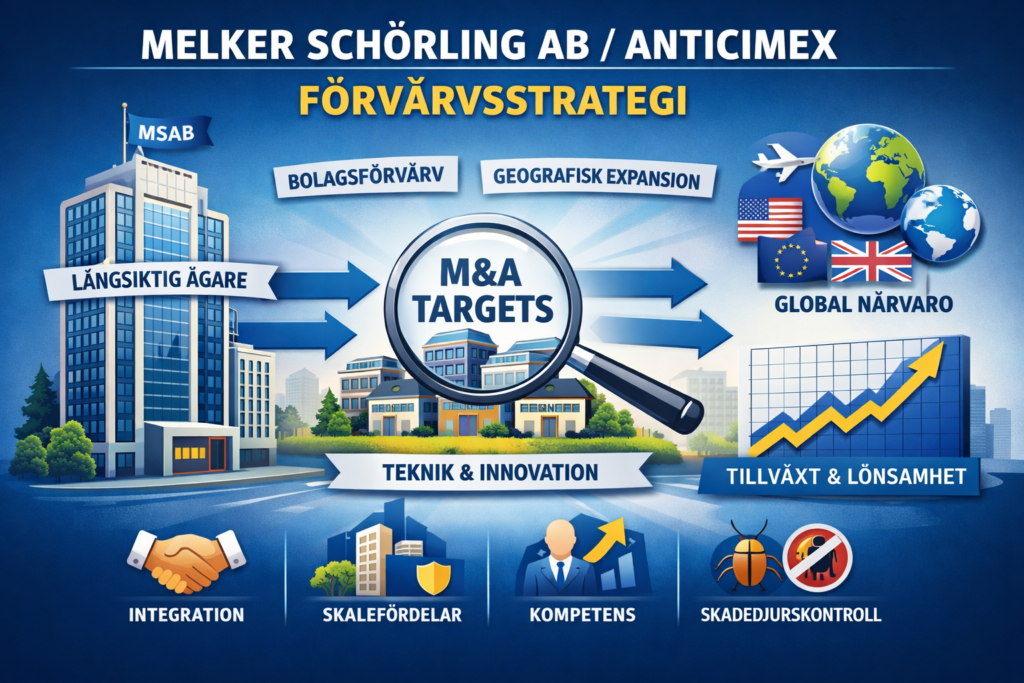
The Strategic Vision Behind the Acquisition
Understanding Anticimex’s Market Position
Anticimex, founded over 80 years ago, had established itself as a modern pest control company with operations spanning 17 countries across Europe, North America, Asia, and Australia . The company demonstrated consistent growth throughout its history, but leadership recognized that maintaining market leadership required more than incremental improvements to traditional service models. The vision was clear: become the global leader in preventive pest control through digital innovation .
This vision necessitated a fundamental shift from reactive, chemical-dependent treatments to proactive, data-driven interventions. Traditional pest control relied on scheduled visits and uniform treatments, regardless of actual pest activity. The future, Anticimex leadership understood, lay in smart monitoring systems that could detect problems early, enable precise interventions, and dramatically reduce chemical usage.
Why WiseCon A/S Became the Target
WiseCon A/S, established in 2008 in Helsinge, Denmark, had emerged as a world-leading specialist in developing electronic intelligence for pest control . The company focused specifically on creating advanced electronic rat traps and monitoring systems that could operate without toxic poisons—a critical advantage given increasingly stringent regulations across Europe regarding rodenticide use .
By 2016, WiseCon had achieved impressive financial performance, doubling its revenue to 90 million DKK and converting a small loss into a 16 million DKK post-tax profit . The company employed 56 people and had developed proprietary technology that aligned perfectly with Anticimex’s strategic direction .
What made WiseCon particularly attractive was its technological approach. The company had developed electronic traps that not only captured rodents but also transmitted real-time data about activations, enabling remote monitoring and targeted responses. This capability transformed pest control from a blind service into an information-driven discipline.
The Two-Phase Acquisition Strategy
Phase One: The Strategic Minority Investment (January 2015)
The acquisition strategy began not with a full takeover but with a calculated minority investment. In January 2015, Anticimex acquired 20 percent of WiseCon’s shares . This initial stake served multiple strategic purposes that reveal sophisticated thinking about technology integration.
First, the minority position allowed Anticimex to evaluate WiseCon’s technology in real-world applications across its existing markets. Rather than relying on laboratory testing or limited trials, the company could deploy WiseCon-based solutions through its established service network and measure actual performance.
Second, this phase created opportunity for cultural assessment. Integrating a nimble 56-person technology company with a multinational corporation employing thousands requires careful attention to organizational dynamics. The two-year partnership period allowed both companies to understand each other’s working styles, values, and operational approaches.
Third, the minority stake enabled market testing of the “Anticimex SMART” concept, which would become the flagship digital offering built on WiseCon’s technology platform . This testing phase proved remarkably successful, with more than 20,000 SMART rodent devices installed globally within two years .
Phase Two: Full Acquisition and Innovation Center Creation (April 2017)
The success of the initial partnership validated the acquisition thesis. By April 2017, Anticimex moved to acquire the remaining 80 percent of WiseCon for an undisclosed three-digit million amount . This full acquisition represented a significant financial commitment, but more importantly, it demonstrated strategic conviction about the role of digital technology in the company’s future.
At the time of full acquisition, more than 20 percent of Anticimex’s global new sales consisted of SMART digital services . This metric confirmed that customers valued the digital approach and that the technology could drive revenue growth, not just operational improvement.
The Innovation Center Model: Preserving Entrepreneurial Spirit
Converting WiseCon into Anticimex Innovation Center
Perhaps the most brilliant aspect of the acquisition strategy was how Anticimex structured the post-acquisition integration. Rather than absorbing WiseCon into its existing corporate structure, the company transformed the Helsinge headquarters into the Anticimex Innovation Center .
This decision preserved what made WiseCon valuable: its entrepreneurial culture, technical expertise, and focused innovation capability. The Innovation Center was established as an independent unit within the Anticimex Group, with responsibility for developing digital solutions across all pest control applications for global markets .
Leadership Continuity
Equally important was the retention of key leadership. WiseCon founder and CEO Preben Fritzbøger continued as head of the new Innovation Center . This continuity ensured that the technical vision and innovative culture would persist even as the company gained access to substantially greater resources.
Fritzbøger recognized the transformative potential of the acquisition: “By being fully owned by Anticimex, we open up for fast growth globally and further resources to develop our products and concepts for new customer groups and markets” . The Innovation Center structure allowed WiseCon to maintain its identity while leveraging Anticimex’s global reach.
Workforce Integration Strategy
The acquisition included thoughtful workforce planning. Of WiseCon’s 56 employees, 46 continued based in Helsinge, focusing on production, development, and training functions. The remaining 10 employees, working in sales and service roles, transferred to Anticimex Denmark’s Roskilde office . This separation recognized that innovation activities required different environments than commercial operations, while ensuring that customer-facing expertise remained accessible.
Technological Outcomes and Market Impact
The SMART Platform Evolution
The acquisition enabled rapid scaling of the Anticimex SMART concept beyond rodent control. The Innovation Center gained mandate to develop digital solutions for various pest types, including flies and other insects . This expansion transformed SMART from a single product line into a comprehensive platform for digital pest management.
The technology platform combines several elements:
- Electronic traps and sensors that detect pest activity without toxic chemicals
- Wireless communication systems that transmit data to central monitoring stations
- Cloud-based databases that enable 24/7 monitoring and analysis
- Automated alert systems that trigger service interventions only when needed
Environmental Benefits
A significant outcome of the digital transformation has been environmental improvement. Traditional pest control relies heavily on rodenticides and insecticides, which pose risks to non-target wildlife and can accumulate in ecosystems. Digital monitoring enables targeted interventions with minimal or no pesticide use .
This environmental advantage aligns with regulatory trends across Europe and North America. Many jurisdictions have implemented stricter rules on preventive poison use, creating market demand for alternative approaches . The WiseCon technology, developed specifically for poison-free operation, positioned Anticimex perfectly for this regulatory environment.
Customer Applications
Digital pest control serves diverse customer segments. Large corporations, particularly in the food industry, benefit from continuous monitoring and detailed compliance documentation. The tourism sector values discreet, effective protection for guests. Municipalities can protect public spaces more efficiently. Even residential communities gain access to professional-grade monitoring .
The technology also supports the development of smart cities, where connected infrastructure enables more efficient public services. Digital pest monitoring represents one component of broader urban intelligence systems.
Financial Implications and Growth Trajectory
WiseCon’s Growth Under Anticimex Ownership
The acquisition immediately accelerated WiseCon’s growth trajectory. Founder Preben Fritzbøger articulated ambitious goals: reaching 500 million DKK in revenue within five years, leveraging Anticimex’s 4,500 employees worldwide . This represented dramatic expansion from the 90 million DKK revenue achieved in 2016, demonstrating how access to global distribution channels transforms small technology companies.
Anticimex’s Return on Investment
For Anticimex, the acquisition delivered multiple forms of return. Financially, the growing percentage of SMART services in new sales indicated strong customer acceptance and recurring revenue potential. Strategically, the company secured exclusive access to leading technology that competitors could not easily replicate. Operationally, digital monitoring enabled more efficient service deployment, reducing unnecessary visits while improving response times to genuine problems.
The two-phase approach also minimized risk. By investing incrementally, Anticimex could validate the technology and market response before committing fully. This patient capital approach contrasts with acquisitions that rush integration and often destroy the value they seek to capture.
Lessons for Strategic Acquirers
The Value of Phased Integration
The Anticimex-WiseCon case demonstrates the advantages of phased acquisitions. The initial minority stake created a two-year observation period during which both companies could assess fit. This reduced the information asymmetry that often plagues acquisitions—buyers discover post-close that technology doesn’t work as promised or that cultures clash irreconcilably.
Preserving Innovation Through Structural Separation
Creating the Innovation Center as an independent unit within Anticimex represents a sophisticated approach to integration. Many acquirers make the mistake of absorbing innovative companies into existing hierarchies, only to find that bureaucracy extinguishes the very creativity they sought to acquire. Anticimex’s structural choice preserved WiseCon’s innovative culture while providing access to global resources.
Strategic Patience in Technology Adoption
The two-year period between minority investment and full acquisition also allowed Anticimex to build organizational readiness for digital transformation. During this time, the company could develop the SMART concept, train service personnel, and educate customers about digital offerings. By the time full acquisition occurred, the organization was prepared to scale.
The Broader Acquisition Strategy Context
Expansion Beyond WiseCon
The WiseCon acquisition fits within a broader Anticimex strategy of targeted technology acquisitions. In July 2018, Anticimex entered the French market by acquiring WiseCon-France, a family-owned company that had been distributing smart pest control devices . This acquisition followed a similar pattern: identifying companies with technological capability and cultural alignment, then integrating them while preserving their strengths.
The French acquisition specifically targeted a company shifting from device distribution to integrated pest management services based on the SMART concept. This demonstrated how Anticimex used acquisitions not just for technology access but for market entry and business model transformation.
Geographic Expansion Through Acquisition
Anticimex’s acquisition strategy has consistently emphasized geographic expansion combined with technology integration. By entering new markets through acquisition rather than organic startup, the company gains immediate local presence, customer relationships, and regulatory knowledge. The acquired companies then gain access to Anticimex’s technology platform and global best practices.
Frequently Asked Questions
1. When did Anticimex acquire WiseCon?
Anticimex bought 20% in January 2015 and the remaining 80% in April 2017.
2. How much was the deal worth?
The price was an undisclosed three-digit million amount in Danish kroner.
3. What happened to WiseCon employees?
Most stayed at the Helsinge headquarters, while some sales and service staff moved to Anticimex Denmark’s Roskilde office.
4. Did WiseCon’s CEO remain?
Yes, founder Preben Fritzbøger continued as head of the Anticimex Innovation Center.
5. What is the SMART concept?
A digital pest control system using electronic traps and sensors for 24/7 monitoring with minimal pesticide use.
6. Was SMART successful before full acquisition?
Yes, over 20,000 devices were installed globally, contributing 20% of new sales.
7. Why create an Innovation Center?
To preserve WiseCon’s innovation culture while leveraging Anticimex’s global resources.
8. What are the environmental benefits?
The system reduces toxic poison use, supporting sustainability goals.
9. Did Anticimex make similar acquisitions later?
Yes, it acquired WiseCon-France in July 2018.
10. How was WiseCon performing before acquisition?
In 2016, revenue doubled to 90 million DKK with a 16 million DKK profit.
Conclusion
The Anticimex Aktiebolag / Wisecon A/S Förvärvsstrategi offers enduring lessons for companies navigating digital transformation in traditional industries. The two-phase approach—starting with minority investment, validating the partnership, then moving to full acquisition with preserved autonomy—demonstrates strategic patience rare in corporate development. The creation of an independent Innovation Center shows how to acquire innovative capability without destroying it. The focus on digital, poison-free technology aligned with regulatory trends illustrates the importance of strategic foresight.