

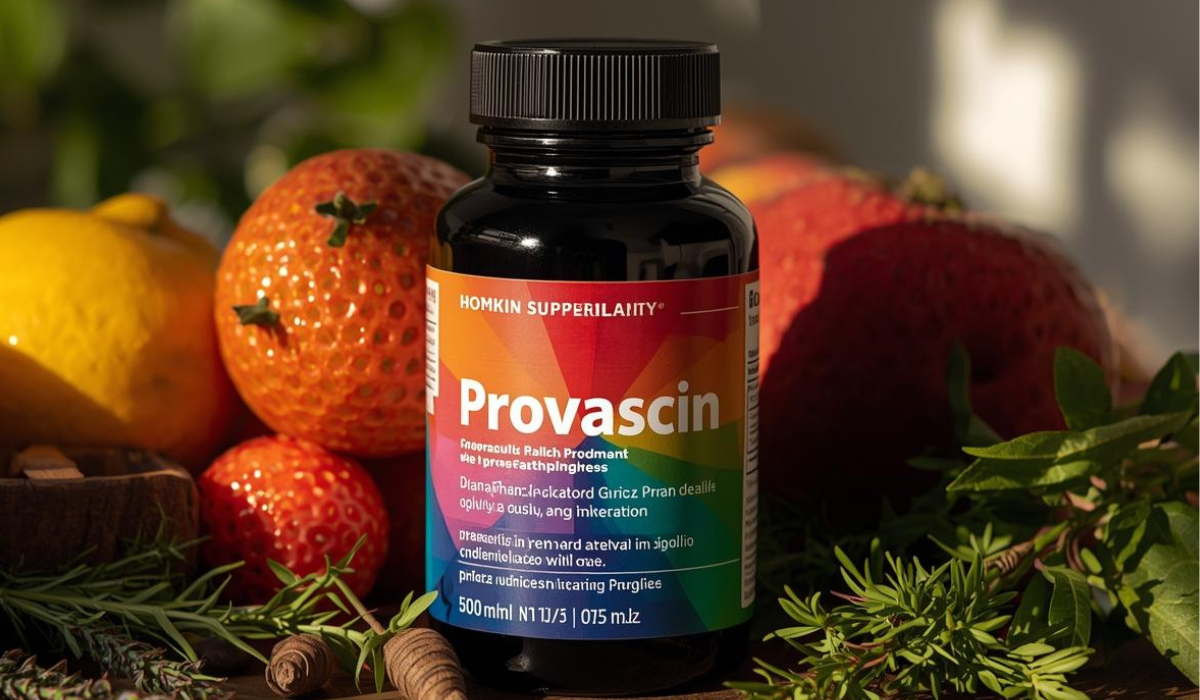
Provascin and Provasin may sound alike, but they are completely different products. One is a dietary supplement promoted for heart health, while the other is a prescription medication used to control cholesterol levels. This guide clearly explains the difference between Provascin and Provasin, including their uses, safety, and effectiveness, so you can avoid confusion and make informed health decisions.
What Is Provascin? (The Dietary Supplement)
Provascin is a branded dietary supplement marketed to support cardiovascular health . Unlike pharmaceutical drugs, it is not approved by the FDA to diagnose, treat, cure, or prevent any disease. Instead, it exists in the wellness space, promising benefits such as improved circulation, cholesterol balance, and enhanced energy .
How It Claims to Work
The marketing focuses on the properties of its individual ingredients:
- Enhanced Circulation: It claims to improve blood flow using ingredients thought to support blood vessel function.
- Cholesterol Support: The blend may include compounds aimed at maintaining healthy levels of lipids.
- Antioxidant Protection: It aims to reduce oxidative stress, a key factor in vascular damage .
Ingredient Profile
While the exact formula can vary, common components found in it and similar heart health supplements include:
- Grape Seed Extract: Rich in antioxidants (polyphenols) that combat inflammation.
- Coenzyme Q10 (CoQ10): Vital for cellular energy production in the heart muscle.
- L-Carnitine: Involved in fat metabolism within cardiac cells.
- Hawthorn Extract: Traditionally used for circulatory support.
- Micronutrients: Such as Magnesium and Potassium for blood pressure maintenance .
The Evidence Gap
It is crucial to understand that no peer-reviewed clinical trials have tested the Provascin formula as a whole . Its potential effectiveness is inferred from laboratory and animal studies on its individual ingredients, not from human trials on the supplement itself. Therefore, efficacy claims should be viewed with caution.
What Is Provasin? (The Prescription Medication)
Provasin (specifically Provasin 20mg Tablet) is a prescription-only medicine. It belongs to a class of drugs known as statins . This is a critical distinction: Provasin is not a supplement; it is a pharmaceutical drug used to manage cholesterol levels.
Mechanism of Action
Provasin works by blocking an enzyme in the liver known as HMG-CoA reductase. The body requires this enzyme to produce cholesterol. By inhibiting it, Provasin effectively:
- Lowers “bad” cholesterol (Low-Density Lipoprotein or LDL).
- Lowers triglycerides (another type of fat in the blood).
- Raises “good” cholesterol (High-Density Lipoprotein or HDL) .
Primary Uses
Doctors prescribe Provasin to:
- Lower high cholesterol when diet and exercise are not enough.
- Prevent cardiovascular events (like heart attacks and strokes) in patients at high risk, even if their cholesterol levels are only moderately elevated .
Provasin Dosage Guidelines (Prescription Medication)
Because Provasin is a prescription drug, dosage must be strictly determined by a physician. The standard presentation is the Provasin 20mg Tablet .
General Administration Guidelines
- How to take: Swallow the tablet whole with a glass of water. Do not crush or chew it.
- When to take: It can be taken with or without food, but consistency is key. Try to take it at the same time each day .
- Missed Dose: If you miss a dose, take it as soon as you remember. However, if it is almost time for your next dose, skip the missed one. Do not double the dose .
Key Considerations
- Long-term Use: Cholesterol management is often a long-term commitment. Provasin is regarded as safe for extended use when prescribed and monitored by a doctor .
- Monitoring: Your doctor will likely order regular blood tests to check your liver function and cholesterol levels while you are on this medication .
Safety, Side Effects, and Interactions
Safety profiles differ significantly between the supplement and the medication (Provasin).
(Supplement) Safety
- General Safety: Generally considered safe for healthy adults, but scientific oversight is minimal.
- Interactions: Ingredients may interact with prescription drugs like blood thinners or blood pressure medication .
- Lack of Regulation: As a supplement, it is not rigorously tested for purity or potency by regulatory agencies like the FDA.
Provasin (Medication) Safety
- Pregnancy and Breastfeeding: Provasin is highly unsafe during pregnancy and breastfeeding, as it may cause harm to the baby .
- Liver Health: It should be used with caution in patients with liver disease and is not recommended for those with severe or active liver conditions .
- Diabetes: Provasin can cause a slight increase in blood sugar levels. Diabetic patients should monitor their levels closely .
Common Side Effects of Provasin
Most side effects are mild and temporary, but you should consult a doctor if they persist :
- Nausea and indigestion.
- Diarrhea.
- Muscle pain or joint pain (on long-term use).
- Pain in the extremities.
Serious Side Effects to Watch For
Seek medical attention immediately if you experience:
- Unexplained or severe muscle pain, tenderness, or weakness.
- Signs of liver problems: yellowing of the skin or eyes (jaundice), dark urine, or severe stomach pain .
Drug Interactions
Provasin can interact negatively with other drugs. It is vital to inform your doctor if you are taking:
- Other cholesterol medicines.
- Certain antibiotics or antifungals (e.g., Itraconazole).
- HIV medications (Protease inhibitors).
- Grapefruit juice (can increase the risk of side effects) .
Supplement vs. Medication: A Clear Comparison
To help visualize the differences, here is a comparison of Provascin (the supplement) and Provasin (the medication) :
| Feature | Provascin (Supplement) | Provasin (Medication) |
|---|---|---|
| Category | Dietary Supplement | Prescription Drug (Statin) |
| Primary Use | General “heart health” support | Lowering high cholesterol and triglycerides |
| Regulation | Not FDA-approved for treatment | FDA-approved (or equivalent) prescription medicine |
| Evidence Base | Low (Ingredient-based studies only) | High (Clinical trials, peer-reviewed) |
| Dosage | Varies by product; not standardized | Fixed (e.g., 20mg tablet) as prescribed by a doctor |
| Primary Risk | Potential unknown interactions | Muscle pain, liver issues, birth defects |
Frequently Asked Questions (FAQ)
Q: Is Provascin the same as Pravastatin?
A: Likely not. “Pravastatin” is the generic name for a specific statin drug. “Provasin 20mg Tablet” contains a statin (Atorvastatin, based on its drug profile) . “Provascin” appears to be a distinctly named dietary supplement with no proven relation to statin drugs . Always check the active ingredient list on your specific product.
Q: Can I take Provascin instead of my prescribed cholesterol medication?
A: Absolutely not. Supplements like Provascin are not a substitute for prescribed medications . Stopping a prescribed statin like Provasin without medical supervision can cause your cholesterol to rise, significantly increasing the risk of heart attack or stroke .
Q: Does Provascin have clinical trials?
A: Currently, there are no published clinical trials testing the complete Provascin supplement formula . Research is limited to its individual ingredients.
Q: What are the common side effects of Provasin?
A: Common side effects can include nausea, indigestion, diarrhea, and muscle or joint pain .
Q: Is it safe to drink alcohol while taking Provasin?
A: Caution is advised. Regular alcohol consumption can increase the risk of liver problems when taking statins. Consult your doctor for guidance .
Conclusion
In summary, Provascin and “Provasin” represent two different approaches to heart health. It is a dietary supplement with a blend of ingredients that show theoretical promise, but it lacks clinical validation for its specific formula . Provasin is a prescription statin with a proven mechanism of action for lowering cholesterol and preventing serious cardiac events, though it requires medical supervision due to potential side effects .