

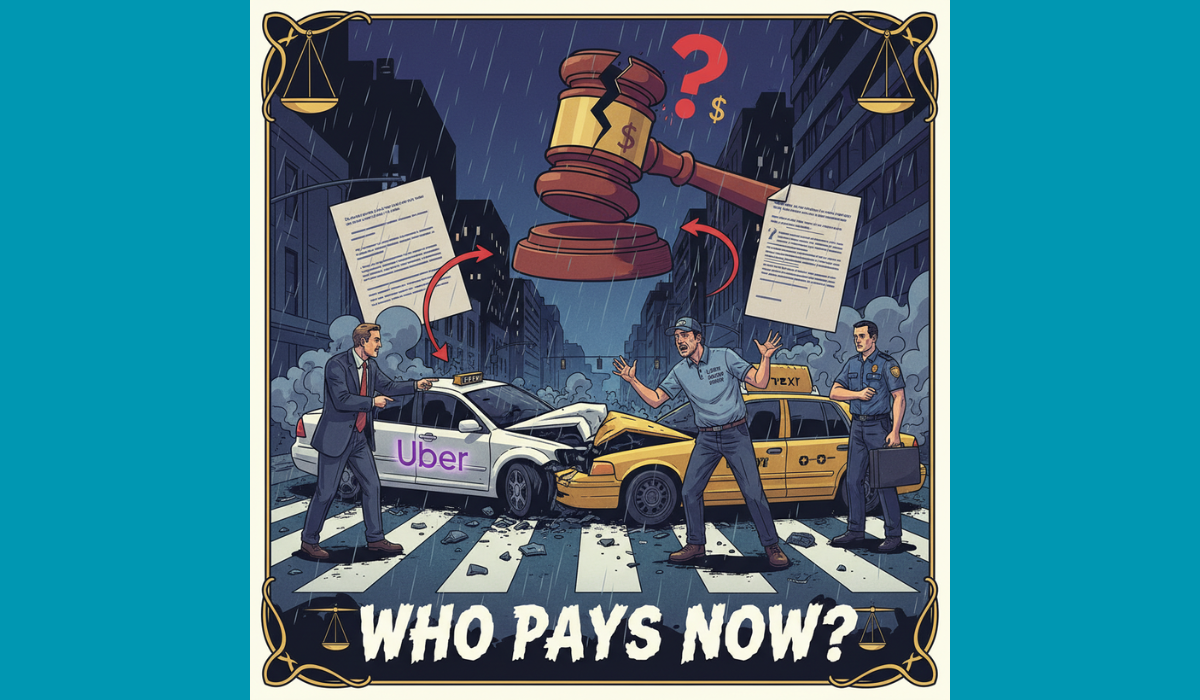
The 2018 death of a pedestrian in Tempe, Arizona, marked a tragic milestone as the first recorded pedestrian fatality involving a self-driving vehicle. This incident forced a critical examination of a complex question: Who bears legal responsibility when an Uber autonomous vehicle with a human “backup driver” causes an accident?
The Tempe Tragedy: A Case Study in Shared Failure
The collision on March 18, 2018, provides a foundational case study. An Uber test vehicle, operating in autonomous mode with a human safety operator behind the wheel, struck and killed pedestrian Elaine Herzberg as she crossed a road outside a crosswalk.
The National Transportation Safety Board’s (NTSB) investigation revealed a cascade of failures involving multiple parties, clearly showing that liability in these cases is rarely simple or one-sided.
Key factors identified by the NTSB included:
- Safety Driver Inattention: The vehicle operator was visually distracted by her personal cell phone in the moments leading up to the crash, failing to monitor the road and the automated system as required.
- System Design Flaws: Uber’s automated driving system (ADS) detected the pedestrian 5.6 seconds before impact but failed to correctly classify her or predict her path. Crucially, the system was designed so that emergency braking maneuvers were disabled while under computer control, relying entirely on human intervention to avoid collisions.
- Corporate Safety Culture: The NTSB sharply criticized Uber’s “inadequate safety culture,” citing insufficient risk assessment, ineffective oversight of safety drivers, and a lack of safeguards against automation complacency.
The table below summarizes the multi-party failures identified in the NTSB’s investigation of this landmark case:
| Responsible Party | Primary Failure | Consequence |
|---|---|---|
| Human Safety Driver | Visual distraction; failure to monitor the driving environment. | Did not intervene to take manual control or brake. |
| Uber Advanced Technologies Group | Inadequate safety culture, risk assessment, and operator oversight; flawed system design. | System could not brake automatically; driver was not properly supervised. |
| Arizona Department of Transportation | Insufficient oversight of automated vehicle testing on public roads. | Lack of robust state-level safety review for testing permits. |
Determining Legal Liability: A Multi-Party Analysis
Following an accident, liability is typically apportioned using principles of comparative fault, meaning responsibility can be shared among several parties.
1. The Backup (Safety) Driver
The human in the driver’s seat is not a passive passenger. They are legally expected to monitor the roadway, remain alert, and be capable of immediate intervention if the automated system fails or behaves unsafely.
Liability for the driver is usually based on negligence. Examples include distraction (like cell phone use), failure to respond to system alerts, or taking control too late or in a manner that worsens the situation. In the Tempe case, the backup driver was criminally charged and pled guilty to endangerment.
2. The Autonomous Vehicle Operator
The company operating the test program (often a subsidiary like Uber’s Advanced Technologies Group) can be held liable for its own negligence. This liability centers on corporate decisions and safety management, such as:
- Inadequate training and supervision of safety drivers.
- Poorly designed or enforced protocols for driver attention and takeover.
- Inadequate monitoring systems to detect driver distraction.
- Decisions to test systems with known limitations in certain environments.
3. The Technology Developer
A separate path to liability is through product liability law. Here, the question is whether the automated driving system itself was defectively designed or manufactured. Allegations may include that the system failed to detect objects, misclassified obstacles (like labeling a pedestrian as a bicycle), or had an unsafe handoff process between machine and human control.
4. Other Drivers and Parties
Traditional accident factors remain relevant. If another human driver causes a hazard that leads to a crash, that driver’s insurance and liability come into play. Poor road conditions, confusing signage, or construction zones can also be contributing factors.
The Critical Role of Insurance Coverage
Insurance is the practical mechanism for recovering damages, and coverage depends heavily on the specific circumstance.
For accidents involving Uber’s autonomous test vehicles with a backup driver, the massive $1 million in primary commercial liability insurance that applies during an active passenger trip is a critical source of recovery for injured victims.
It is vital to distinguish this from accidents involving an unauthorized “backup driver” in a standard Uber ride (e.g., a friend driving the Uber driver’s car). In those everyday scenarios, Uber’s commercial policies likely do not apply because the driver is not the approved, vetted person on the app. Recovery would then typically depend on that unauthorized driver’s personal auto insurance.
Key Lessons and Recommendations
The Tempe crash led to specific safety recommendations from the NTSB, highlighting areas for systemic improvement:
- For Regulators: Strengthen oversight of autonomous vehicle testing, requiring detailed safety plans and mechanisms to monitor driver engagement.
- For Companies: Implement a rigorous Safety Management System that proactively addresses risk, supervises operators, and combats complacency.
- For the Public: Understand that vehicles labeled “self-driving” or “autonomous” during testing still require a fully attentive human ready to take over at any moment.
If you are involved in or injured by an autonomous test vehicle, protecting your rights involves immediate steps: document the scene, secure the police report, and seek legal counsel familiar with the unique complexities of autonomous vehicle liability and layered insurance policies.
Looking for information on a different type of Uber accident?
While this article focuses on accidents involving autonomous test vehicles, liability in standard rideshare accidents follows different rules. Would you like an explanation of how fault and insurance work when a regular Uber driver, or another motorist, causes a crash?