

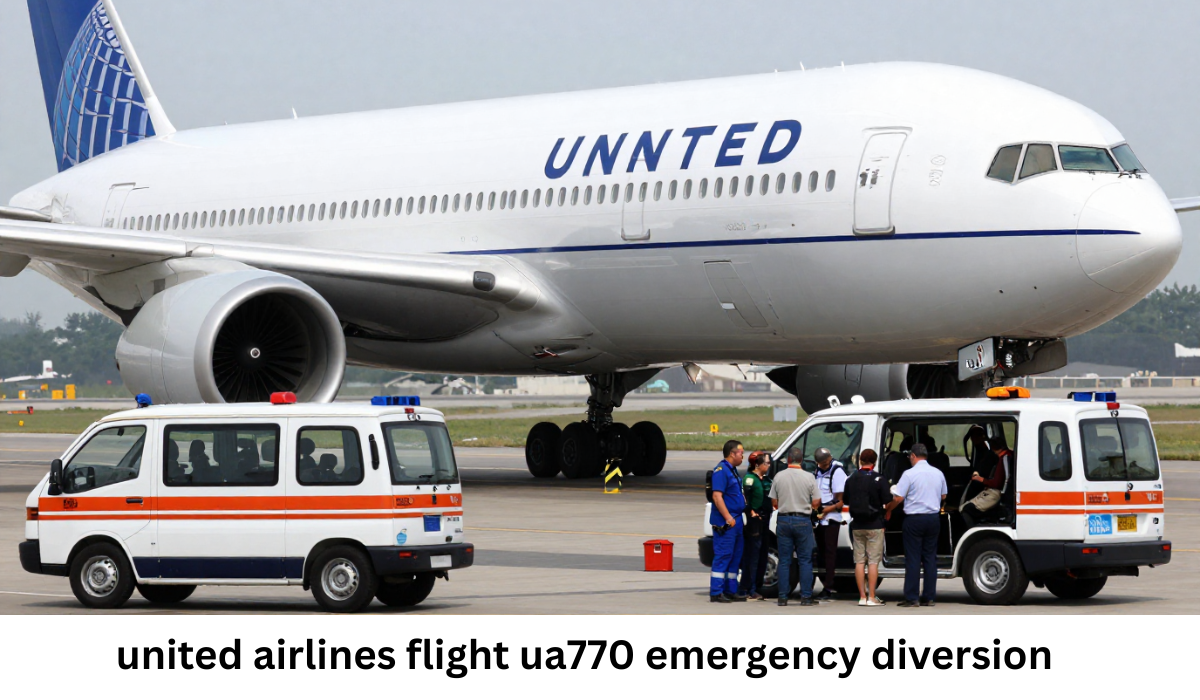
On May 27, 2025, a routine transatlantic journey transformed into a real-world demonstration of aviation’s unwavering commitment to safety. United Airlines Flight UA770, traveling from Barcelona to Chicago, became the subject of headlines when it executed a controlled emergency diversion to London Heathrow. This incident, prompted by a cabin pressurization alert, ended with a safe landing and zero injuries . It provides a compelling narrative not of system failure, but of multiple safety layers and rigorous training working exactly as designed to protect passengers and crew.
The following table outlines the core details of the United Airlines Flight UA770 incident.
Understanding Squawk 7700 and Cabin Pressurization
When the pilots of UA770 “squawked 7700,” they activated a universal radio transponder code that immediately signals “general emergency” to air traffic control (ATC) worldwide . This single action prioritizes the flight, clearing its path and ensuring immediate coordination with emergency services on the ground.
The trigger for this action was an alert related to the aircraft’s cabin pressurization system. At cruising altitudes, the outside atmosphere is too thin to sustain human life. The pressurization system artificially maintains a safe, breathable cabin environment . Modern aircraft like the Boeing 787-9 are equipped with sophisticated sensors designed to detect even minor irregularities in this system long before they pose a direct threat to passengers .
The Decision to Divert: A Textbook Safety Protocol
Faced with this alert, the flight crew’s decision to divert was not an overreaction but a strict adherence to precautionary principles and international flight safety regulations. Continuing a long-haul flight over the Atlantic Ocean with a potential pressurization issue would violate safety standards known as ETOPS (Extended-range Twin-engine Operational Performance Standards) .
London Heathrow was selected as the optimal diversion point due to several key factors:
- Proximity: It was the nearest major international airport capable of handling a wide-body aircraft like the 787-9 .
- Infrastructure: As a global hub, Heathrow has extensive emergency services, full maintenance facilities, and the necessary technical support .
- Operational Support: United Airlines maintains a significant operational presence there, allowing for swift passenger care and logistical coordination .
Layers of Safety: From Cockpit to Cabin
The successful resolution of this incident highlights the multiple, interlocking layers of safety in modern commercial aviation.
- Crew Training and Protocol: Pilots undergo rigorous, recurrent training in simulators for exact scenarios like pressurization anomalies . Their response is guided by detailed checklists and procedures designed to remove guesswork. The cabin crew also plays a vital role, trained to manage passenger anxiety through calm, clear communication and maintaining a composed demeanor .
- Aircraft Design and Redundancy: Modern jets are engineered with redundant safety systems. In many cases, an alert can be caused by a single faulty sensor, while backup systems continue to operate normally to maintain safety . This design philosophy ensures there is no single point of failure.
- Global Coordination: The diversion activated a seamless international response. Air traffic control centers across multiple countries coordinated to provide the aircraft with a priority flight path, while ground teams at Heathrow prepared emergency vehicles and support services as a standard precaution .
Passenger Experience and Airline Response
For the 257 passengers and crew onboard, the event was undoubtedly unsettling, yet reports indicate it was managed without panic . The crew’s professional communication was crucial in maintaining calm. Passengers reported that the pilots and flight attendants provided clear, reassuring updates throughout the process .
Following the safe landing, United Airlines’ response focused on passenger care. The airline arranged meals, hotel accommodations for those requiring an overnight stay, and rebooking onto the next available flights to Chicago . This comprehensive support is part of standard airline procedures and, in this case, was facilitated by European Union regulations that mandate care for passengers during significant travel disruptions .
Conclusion: A Reaffirmation of Trust
The story of United Airlines Flight UA770 is ultimately one of reassurance. It demonstrates that the term “emergency diversion” often signifies the opposite of danger—it represents the system’s proactive capacity to identify potential issues early and resolve them with immense caution and capability.