

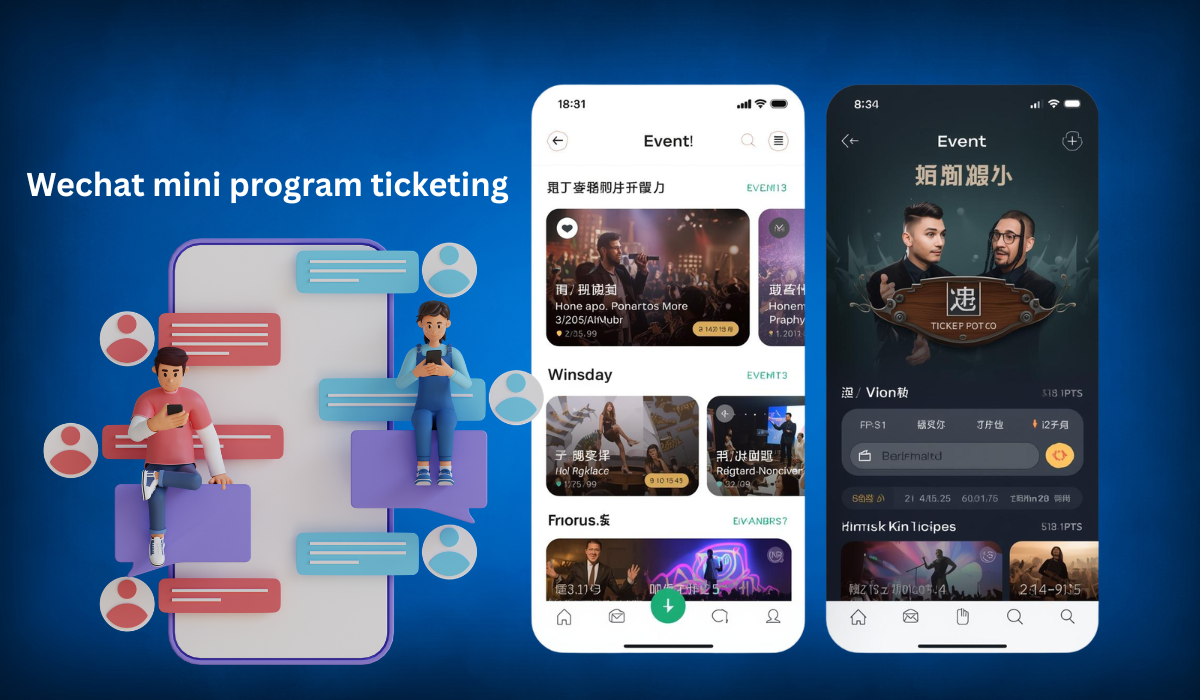
Introduction
In the landscape of digital innovation, few platforms have transformed user behavior as profoundly as WeChat. What began as a simple messaging app has evolved into an indispensable “super-app” with over 1.3 billion users, predominantly in China and across Asia . Within this ecosystem, WeChat Mini Programs—lightweight sub-applications that function inside the main WeChat app—have emerged as a revolutionary force for event ticketing.
Understanding WeChat Mini Programs for Ticketing
What Are WeChat Mini Programs?
WeChat Mini Programs, known as “Xiaochengxu” in Chinese, are sub-applications that operate within the WeChat ecosystem. Unlike traditional mobile apps that require downloading and installation from app stores, Mini Programs are accessible instantly by scanning a QR code, searching for a service name on WeChat, or clicking on links shared by friends . They offer a user experience similar to native apps but load significantly faster and consume minimal device memory—typically under 1MB compared to full apps that can exceed 100MB .
For event ticketing specifically, this “tap-to-use” functionality creates a frictionless entry point. Users don’t need to navigate away from their primary communication platform, register for new accounts, or remember additional passwords. The entire ticketing journey unfolds within an environment where users already spend an average of 90 minutes daily .
The Evolution from Traditional Ticketing
Traditional ticketing models typically involve disjointed experiences: event discovery on social media, redirection to external websites, manual payment entry, and email confirmations that often get lost. WeChat mini program ticketing events eliminate these friction points entirely by centralizing every step—discovery, purchase, ticket storage, and entry validation—within one familiar interface .
This integrated approach reflects China’s mobile-first digital culture. As the TNMT analysis notes, nearly all internet users in China access the web via mobile devices, making mobile-centric experiences not just convenient but essential for reaching broad audiences .
How WeChat Mini Program Ticketing Events Work
Event Discovery Within the WeChat Ecosystem
Discovery represents one of the strongest advantages of Mini Program-based ticketing. Users can access events through multiple organic channels:
- QR Codes: Strategically placed on posters, flyers, physical locations, or promotional materials
- Social Sharing: Event links shared directly in chats, groups, or through personalized invitation posters
- WeChat Search: Users searching for keywords like “concerts,” “exhibitions,” or specific event names
- Official Account Integration: Content published through WeChat Official Accounts linking directly to Mini Program event pages
This multi-channel discovery model aligns perfectly with social behavior patterns, allowing events to spread naturally through peer-to-peer sharing. The Royal Melbourne Show’s pioneering Mini Program demonstrated this power, achieving 1,800 new followers and open rates 500% higher than industry averages through strategic content marketing and influencer engagement .
Seamless Purchase and Payment Integration
Once users discover an event, the purchase flow leverages WeChat Pay’s deep integration. Since payment credentials are already linked to user accounts, the checkout process requires minimal taps—eliminating manual card entry or third-party gateway redirection .
For organizers, this integration delivers:
- Instant payment confirmation
- Real-time inventory updates preventing overselling
- Reduced cart abandonment through frictionless checkout
The Topgolf China case study illustrates how comprehensive this integration can become. Their Mini Program functions as a command center handling not just event bookings but also F&B ordering, digital wallet preloading, and loyalty program participation—all synced in real-time with point-of-sale and ERP systems .
Digital Ticket Generation and Secure Storage
After successful payment, the system generates digital tickets, most commonly represented by dynamic QR codes. These tickets remain accessible within the Mini Program, eliminating concerns about lost emails, forgotten PDFs, or screenshot fraud .
Security features include:
- Dynamic QR code encryption that refreshes periodically
- User account binding linking tickets to specific WeChat IDs
- Real-time validation preventing duplicate entries
Efficient Event Check-In
At the venue, staff scan ticket QR codes using dedicated staff-side Mini Programs or scanning devices. The system verifies tickets in real-time and marks them as used. This process scales effectively from small workshops to large concerts, with advanced configurations supporting offline validation for venues with unstable network connectivity .
Key Features of Successful Ticketing Mini Programs
User-Facing Functionality
One-Click Authorization: WeChat login integration automatically accesses user profile information, eliminating registration friction while complying with data protection regulations .
Intelligent Event Discovery: Search functionality with fuzzy matching, category navigation, and personalized recommendations based on user behavior .
Flexible Ticketing Options: Support for various ticket types—early bird, VIP, group passes, time-slot-based entry—with dynamic pricing capabilities that respond to demand .
Social Sharing Tools: Built-in functionality for generating personalized invitation posters with unique QR codes, enabling referral tracking and incentivized sharing through rewards programs .
Automated Notifications: Push notifications for purchase confirmation, upcoming event reminders, schedule changes, and post-event follow-ups .
Organizer Management Features
Real-Time Analytics Dashboard: Monitoring ticket sales, user demographics, traffic sources, and conversion rates with exportable reports .
Event Lifecycle Management: Tools for creating events with rich media, setting inventory limits, implementing pricing tiers, and automatically closing expired listings .
Marketing Integration: Built-in promotional tools including discount codes, group-buying options, and referral rewards programs .
Attendee Communication: Batch messaging capabilities for sending updates, reminders, and post-event surveys .
Industry Applications and Case Studies
Entertainment and Performing Arts
Concert organizers leverage Mini Programs for rapid ticket drops during high-demand sales. The instant loading and familiar payment flow reduce the likelihood of users abandoning purchases during peak traffic periods. Real-time inventory updates prevent overselling, while secure QR codes minimize scalping risks.
Conferences and Business Events
Business event organizers utilize Mini Programs for multi-day passes, session tracking, and attendee networking. The Australian Tourism Business Events division launched a dedicated Mini Program serving as an information hub for corporate event planners, featuring destination information, sample itineraries, and direct communication channels with Australian tourism representatives .
Exhibitions and Museums
Cultural institutions implement time-slot ticketing through Mini Programs to manage visitor flow effectively. The Beijing tourism authority integrated 74 municipal attractions into a unified Mini Program ticketing platform, streamlining the booking process for millions of visitors .
Hospitality and Entertainment Venues
Topgolf’s China operations demonstrate the comprehensive potential of Mini Programs beyond simple ticketing. Their WeChat-centric ecosystem handles venue bookings, food ordering, gift card purchases, loyalty program management, and post-visit engagement—all synchronized with on-site operations .
Sporting Events and Festivals
The Royal Melbourne Show’s pioneering Mini Program represents Australia’s first major event implementation. The program provided Chinese visitors with event information, navigation assistance, and integrated payment options, resulting in significant ticket sales growth and audience expansion .
Security and Fraud Prevention
Dynamic QR Code Technology
Modern ticketing Mini Programs employ encrypted QR codes that can be dynamically refreshed, rendering screenshots ineffective for unauthorized entry. Each scan validates against backend systems in real-time, ensuring each ticket is used only once .
User Binding
Tickets can be bound to specific WeChat accounts or phone numbers, ensuring only the rightful owner can use them. This binding significantly reduces resale fraud and unauthorized transfers .
Real-Time Validation
Venue-side scanning applications communicate with centralized servers to verify ticket authenticity immediately. Advanced configurations support offline validation modes that synchronize once connectivity returns, ensuring uninterrupted entry even during network outages .
Compliance and Data Protection
All user data processing must comply with China’s Personal Information Protection Law. Reputable Mini Program developers implement encryption, access controls, and data minimization practices to protect attendee information .
Future Trends in WeChat Mini Program Ticketing
AI-Powered Personalization
Machine learning algorithms analyzing user behavior—past event attendance, search patterns, and engagement history—will enable increasingly accurate event recommendations delivered directly within Mini Programs.
Facial Recognition Integration
Several venues are experimenting with facial recognition check-in, where attendees’ faces serve as their tickets. This technology promises even faster entry while maintaining security, though privacy considerations require careful navigation.
Enhanced Augmented Reality Features
AR integration could transform event experiences through interactive venue maps, virtual seat previews, and immersive promotional content accessible through Mini Program cameras.
Deeper CRM Integration
As Topgolf’s implementation demonstrates, Mini Programs are evolving into comprehensive customer relationship management hubs. Future iterations will offer increasingly sophisticated segmentation, personalization, and automation capabilities .
Frequently Asked Questions
Q: What exactly is a WeChat Mini Program for ticketing?
A: A WeChat Mini Program for ticketing is a lightweight sub-application operating within the WeChat ecosystem that enables users to discover events, purchase tickets, store digital credentials, and gain venue entry—all without leaving the WeChat app .
Q: How do users find ticketing Mini Programs?
A: Users can access ticketing Mini Programs through multiple channels: scanning QR codes on promotional materials, searching for event names or keywords in WeChat, clicking links shared by friends in chats or groups, or following links from Official Account content .
Q: What payment methods do ticketing Mini Programs accept?
A: WeChat Pay serves as the primary payment method, leveraging users’ existing linked payment credentials for frictionless checkout. Some implementations may support additional options, but WeChat Pay’s deep integration provides the smoothest experience .
Q: How secure are digital tickets in Mini Programs?
A: Digital tickets in Mini Programs employ multiple security layers including dynamic QR codes that refresh periodically, user account binding preventing unauthorized use, and real-time validation ensuring each ticket scans only once .
Q: Can attendees transfer tickets to friends?
A: Transfer capabilities depend on organizer settings. Some events allow ticket transfers through Mini Program interfaces, while others bind tickets strictly to original purchasers to prevent scalping. Always check specific event policies .
Q: Do users need to download anything to use ticketing Mini Programs?
A: No, Mini Programs require no downloading or installation. They load instantly within WeChat when accessed via QR code, search, or shared link, and are automatically saved to the user’s Mini Program folder for future access .
Q: How much does it cost to develop a ticketing Mini Program?
A: Development costs vary significantly based on functionality complexity, ranging from standardized template solutions for simple events to fully customized implementations with CRM integration, loyalty programs, and advanced analytics. Consulting with development partners provides accurate project-specific estimates .
Q: Can Mini Programs send reminders about upcoming events?
A: Yes, Mini Programs can send push notifications through WeChat’s service notification system for purchase confirmations, event reminders, schedule changes, and post-event follow-ups .
Q: Are WeChat Mini Programs only relevant for Chinese audiences?
A: While WeChat’s user base concentrates in China and Asia, global brands targeting Chinese outbound travelers increasingly implement Mini Programs to engage this high-spending demographic through familiar digital environments .
Q: How do organizers check tickets at venue entrances?
A: Venue staff use dedicated staff-side Mini Programs or scanning devices to scan attendee QR codes. The system validates tickets in real-time against backend databases and marks them as used, preventing duplicate entries .
Conclusion
WeChat mini program ticketing events represent far more than a technological convenience—they embody a fundamental shift in how events are marketed, sold, and experienced. By eliminating traditional friction points, leveraging powerful social distribution mechanisms, and providing comprehensive data insights, Mini Programs deliver value to organizers and attendees alike.