

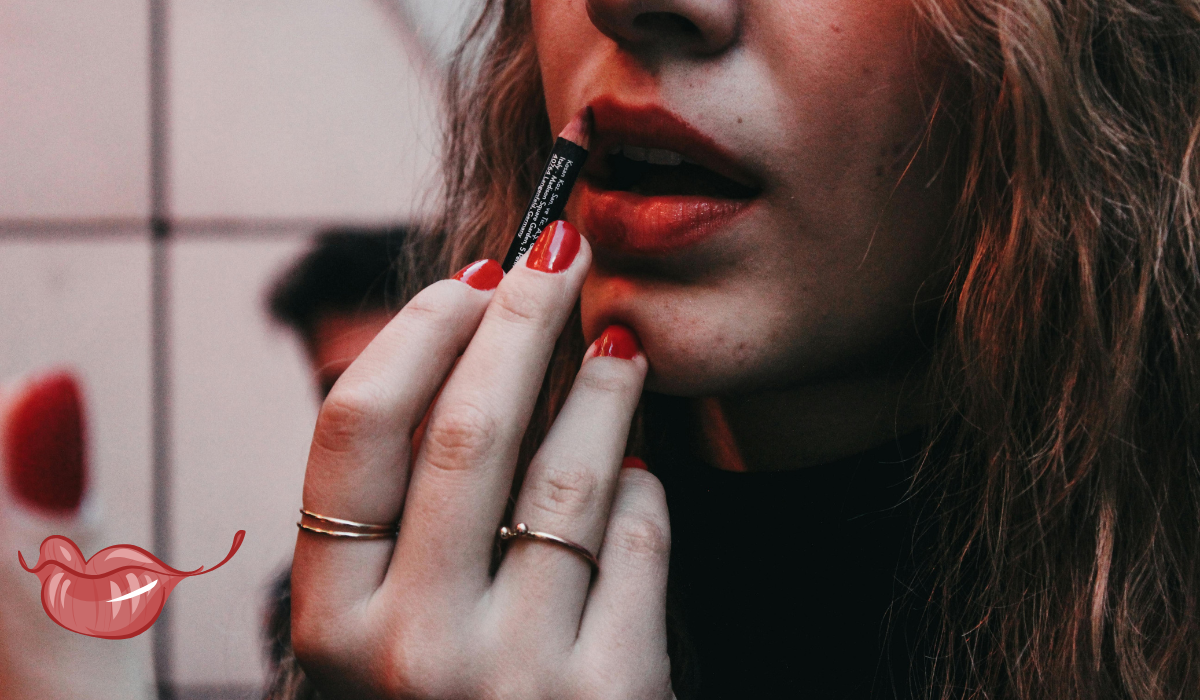
Have you ever stared at your reflection while carefully outlining your lips and wondered who created this magical product? The question who invented lip liner leads to a fascinating story spanning Hollywood’s Golden Age, immigrant innovation, and cultural revolutions that changed beauty forever.
The Inventor of Lip Liner
Lip liner as we know it doesn’t have a single inventor, but its development is closely tied to Max Factor Sr., the Polish-born cosmetic genius who revolutionized makeup for Hollywood. While people had defined their lips for centuries, Factor’s innovations in the 1920s and 1930s laid the groundwork for modern lip liner by creating precise definition tools for film stars.
What Exactly Is Lip Liner?
Before exploring its history, let’s understand what lip liner actually is.
Lip liner (or lip pencil) is a cosmetic designed to:
- Outline lips to prevent lipstick from bleeding or feathering
- Fill in uneven areas on the outer edges of the lips
- Create the illusion of fuller, more symmetrical lips
- Establish sharper definition between lips and skin
Unlike regular lipstick, lip liner contains more wax and pigment with less oil, giving it a firmer consistency that allows for precise application.
Ancient Origins: The Desire to Define Lips
The desire to enhance lips predates modern cosmetics by millennia. Ancient civilizations used various substances to add color to their lips:
| Civilization | Lip Coloring Methods |
|---|---|
| Mesopotamia (5000 years ago) | Crushed semi-precious stones |
| Ancient Egypt | Purple-red from iodine, henna, crushed beetles |
| 16th Century England | Beeswax and plant-based mixtures |
These early methods focused on adding color rather than creating definition, but they established the cultural importance of lip enhancement.
Max Factor: The Father of Modern Makeup
Who Was Max Factor?
Max Factor Sr. was born Maksymilian Faktorowicz in 1877 in Zduńska Wola, Poland (then part of the Russian Empire). His journey to becoming the father of modern cosmetics is remarkable:
- Age 8: Began working as an assistant to a dentist and pharmacist
- Age 9: Apprenticed to a wig maker and cosmetician
- Age 14: Working for a wig maker to the Imperial Russian Grand Opera
- Early 20s: Served in the Imperial Russian Army Hospital Corps
- Post-service: Opened his own shop selling hand-made rouges, creams, and fragrances
His reputation grew when a traveling theatrical troupe wore his cosmetics to perform for Russian nobility, leading to his appointment as the official cosmetics expert for the royal family.
The Move to Hollywood
Concerned about increasing anti-Jewish persecution in the Russian Empire, Factor emigrated to the United States in 1904. After briefly settling in St. Louis, he recognized a unique opportunity in the growing film industry.
In 1908, Factor moved his family to Los Angeles. In 1909, he founded “Max Factor & Company,” which would become the most influential name in cosmetics.
The Birth of Lip Liner in Hollywood
The Problem with Early Film Makeup
When Factor arrived in Hollywood, actors faced a significant challenge. The accepted makeup for stage performance was greasepaint in stick form. While it worked for live theater, it was problematic for film because:
- It couldn’t be applied thinly enough for the camera
- The colors weren’t appropriate for the new film medium
- It appeared heavy, cakey, and unnatural on screen
The Breakthrough
By 1914, Max Factor had perfected the first cosmetic specifically created for motion pictures—a thinner greasepaint in cream form that wouldn’t crack or cake. This innovation, called “Flexible Greasepaint,” was the first makeup designed specifically for film.
Defining Lips for the Silver Screen
As cinema evolved, so did the need for precise lip definition. Silent film stars required exaggerated features to convey emotion, while the advent of “talkies” created new demands for natural-looking yet defined lips.
Actresses began using liner pencils in various ways during the 1920s. Notable early adopters included:
| Actress | Lip Signature |
|---|---|
| Clara Bow | Heart-shaped lips, defined cupid’s bow |
| Marlene Dietrich | Overlined lips for dramatic effect |
| Joan Crawford | “Hunter’s Bow” overdrawn lips (created by Max Factor) |
These stars worked directly with Max Factor, who personalized their makeup to present them in the best possible light on screen. Joan Crawford’s overdrawn “Hunter’s Bow” lips became her signature look and required precise definition that only lip liner could provide.
The First Lip Liner Patent
Interestingly, one of the earliest patents related to “lip liner” wasn’t for a pencil at all. In 1955, Jessie I. Weiler of Los Angeles filed a patent for a physical lip liner device—a wire guide patterned to correspond with the outline of the upper lip.
The device had a wire formed to match the upper edge of lip rouge application, with a V-shaped depression at the center for the cupid’s bow. Users would apply lip rouge to the inner surface, press it against the upper lip to transfer the outline, then roll the upper lip over the lower lip to transfer the line to the bottom lip.
This 1958 patent demonstrates that even before modern lip pencils existed, women sought tools to achieve the perfect lip line.
The Evolution of Lip Liner Through the Decades
1930s-1950s: A Professional Tool
Throughout these decades, lip liner remained primarily a professional tool used by makeup artists for film and photography. Ordinary women relied on lip brushes for definition—a slower, more skill-demanding process.
1960s-1970s: Consumer Access
The pencil format we recognize today evolved during this period. Lip pencils became more accessible to consumers, though they remained secondary to lipstick in most makeup routines.
1980s: Lip Liner Comes Into Its Own
The 1980s saw lip liner gain prominence as bold, defined lips became fashionable. Women embraced stronger makeup looks, and liner provided the structure these styles required.
1990s: The Iconic Dark Liner Revolution
The 1990s brought the most distinctive lip liner trend in history: dark brown liner paired with lighter lipstick. This look became the decade’s signature.
What many don’t realize is that this trend originated in Black and Latina communities decades before reaching mainstream popularity. Black women, underserved by cosmetics companies that ignored their needs, innovated with what was available. Maybelline’s classic brow pencil became a “cultural makeup staple at home,” used to achieve lip definition when proper lip liners weren’t available in appropriate shades.
In Los Angeles’s Mexican-American neighborhoods, dark liner with light lips became a marker of chola subculture, tracing back to the pachucas of the 1940s who created their own fashion identity.
By the late 1990s, the look had spread to mainstream culture, worn by celebrities like Pamela Anderson and supermodels worldwide.
Modern Lip Liner: Today’s Essential Tool
The Social Media Revival
Lip liner has made a triumphant comeback, driven largely by social media. The hashtag #lipliner now clocks billions of views on TikTok, and beauty influencers regularly showcase techniques and products.
How People Use Lip Liner Today
For Definition and Prevention:
- Creating clean edges for lipstick application
- Preventing color bleeding, especially with bold shades
- Extending lipstick wear time throughout the day
For Lip Enhancement:
- Overlining strategically for a fuller appearance
- Creating balance between upper and lower lips
- Lifting the appearance of the mouth corners
As All-Over Color:
Many women now use lip liner as complete lip color, appreciating its staying power and matte finish.
Conclusion
Lip liner’s story is a journey from ancient lip coloring to Hollywood innovation and modern beauty culture. While no single inventor created it, Max Factor Sr. played a pivotal role in shaping the tool we know today, bringing precision and definition to film stars’ lips. Over decades, lip liner evolved from a professional necessity to a consumer staple, influencing trends across cultures—from the iconic 1990s dark liner to today’s social media-driven techniques.
Today, lip liner is more than a cosmetic; it’s a versatile tool for definition, enhancement, and lasting color, proving that a simple pencil can leave a lasting mark on beauty history.